A patient approach that builds coordination and confidence through proper technique.
There is something undeniably powerful about teaching children to jump rope. When you watch a kid who barely remembers how to balance slowly begin to coordinate their timing, you see real progress unfold. The learning curve can be frustrating at first — they might step on the rope, get tangled or simply not understand how to sync their hops with the swing. But patience pays off. I've seen children who spent weeks struggling suddenly click and that moment when it finally clicks is one of the best rewards in fitness instruction. The key is starting gently: let them stand with the rope behind them, practice the swinging motion without jumping and gradually introduce the timing.
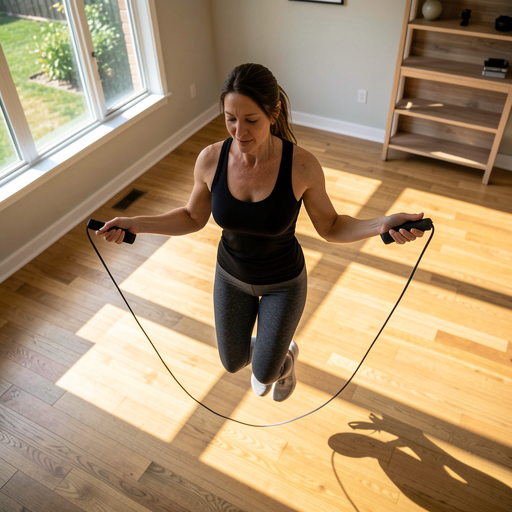
This foundational approach removes the pressure and builds confidence before they ever attempt to jump rope for real. The progression varies wildly from child to child and that is completely normal. Some youngsters pick it up in three or four sessions; others need three or four weeks. My youngest grandson surprised me by jumping higher than I managed on my third try. The five-year-old took her time but flourished by week four. These differences matter because they remind us that every body learns differently.
🎖️
What works for one child might frustrate another. The beauty of jump rope as a coordination tool is that it meets each kid where they are. There is no race, no scoreboard — just steady, incremental improvement that compounds over time. I have six grandchildren spread across three generations and I plan to introduce each of them to this system. The one-year-olds will just watch, the three and four-year-olds will start with the basics and the eight-year-old is practically ready to go. Each stage has its own rhythm.
🌴
The youngest children benefit enormously from building gross motor skills early, while the older ones can refine timing and speed. You will notice the biggest gains in kids who spend most of their time seated — in highchairs, strollers or car seats. Getting them moving and developing that body awareness changes everything. Jumping rope becomes both play and purposeful training rolled into one. Investing in proper equipment matters more than people realize. The rope length must match the child's height.
🦎
The surface should be forgiving but not overly cushioned. I recommend starting with a weighted beginner rope if the child is struggling with timing, then transitioning to a standard cordless or beaded rope as skills develop. The beginner rope factor is keeping it fun. When exercises feel like games, children stay engaged. They come back for more. And that return on investment — building coordination, rhythm and a lifelong love of movement — is worth far more than any fancy machine or expensive program you could buy.