Essential stretches and movements to aid recovery after jumping rope.
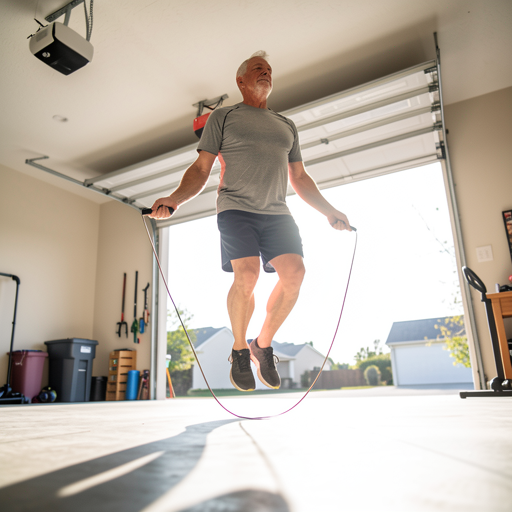
If you've been pounding the pavement or, more fun still, jumping rope in your garage, your body deserves a proper cool-down that actually does something productive. A proper cool-down is an essential part of training programs because it helps your body transition from high-intensity effort back to a resting state safely. Too many people skip this crucial window after their workout, especially after something as demanding as jumping rope and wonder why their knees ache for days or their hamstrings feel like tight rubber bands. The truth is, a smart cool-down routine doesn't just feel good in the moment — it sets you up for recovery, keeps your joints happy and prevents the minor niggles from becoming chronic problems that sideline you for weeks. Start on the floor with hydrants, which fire up your glutes without slamming your joints and pair them with gentle crunches that keep your core engaged without forcing anything.
The key here is to move slowly and resist the urge to push off with your feet or bounce through repetitions. This controlled approach protects your knees while still delivering a meaningful stretch. For anyone who's spent time trying to jump rope and dealt with lower back discomfort, lumbar stretches are your new best friend. These stretches maintain the natural curve in your spine and prevent the lower back from collapsing inward, which is exactly what happens when your muscles tighten up after a solid workout.
🔧
Hold each movement for thirty seconds, breathe through it and let the stretch do the work rather than fighting against your own body. Walking lunges come next and honestly, this is where things get interesting because there are so many ways to angle them. Forward and backward lunges target different muscle groups than lateral or side-to-side variations and adding an up-and-down progression keeps your balance sharp while your legs burn. Each direction challenges your stability in a slightly different way, which matters if you want well-aligned posture and a back that stays stiff in the right places rather than hunched and tight.
😅
People with tight hamstrings or those who've struggled with lower back pain often find that walking lunges, done with proper form, become the cornerstone of their routine because they simultaneously stretch, strengthen and mobilize at the same time. The final piece of the puzzle is a bending and twisting routine that braces your core against every movement while your body gradually comes back to baseline. You're not just going through the motions here — every straightening, twisting and bending motion is deliberate and purposeful, keeping everything connected and functional.
🏼️
This is especially relevant when you think about how jumping rope sends impact waves through your entire system from your ankles to your spine and a targeted cool-down neutralizes those forces before they pile up. Take your time through each exercise, don't rush the process and trust that those thirty seconds per stretch compound into real results over weeks and months of consistent training. Your future self will thank you for not cutting corners on recovery.